As weight-loss medications like Ozempic and Wegovy continue to gain popularity, more Americans are reconsidering their approach to weight loss in the new year.
A December survey of 1,977 Americans, conducted by Sunlight.com, finds that interest in GLP-1 medications is rising alongside more traditional strategies, such as diet and exercise, reflecting a shift in how people think about long-term weight management.
Key findings:
- 52% of Americans want to lose weight in 2026
- 27% of those who want to lose weight intend to use a GLP-1
- Improved health and confidence are the primary motivations for weight loss
- Career considerations play a role for some Americans, as 15% hope weight loss will advance their career, and 51% expect it to increase confidence at work
More Than Half of Americans Plan To Lose Weight in 2026
More than half of Americans say they plan to lose weight in 2026, indicating that weight loss remains a top personal goal as the new year approaches. Most respondents are not setting modest targets. Among those planning to lose weight, 42% aim to lose between 10 pounds and 25 pounds, while 34% hope to lose between 26 pounds and 50 pounds, and 17% want to lose more than 50 pounds.
1 in 7 Americans Plan To Use a GLP-1 Medication in 2026
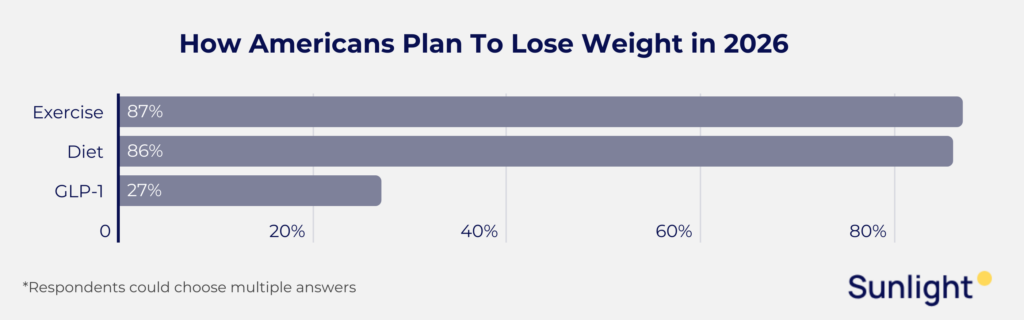
Overall, one in seven Americans say they expect to use a GLP-1 medication such as Ozempic or Wegovy in 2026. Among respondents who plan to lose weight next year, 27% say they plan to use a GLP-1. While interest in medication is growing, traditional approaches also remain common, with 88% planning to exercise, and 86% planning to make dietary changes.
“As Americans consider their New Year’s resolutions, many are recognizing GLP-1s as a more effective option for weight loss than the gyms or fad diets,” says Sunlight.com’s Chief Medical Advisor, Dr. Angela Tran. “Increased awareness, research, and conversations with trusted friends, family members, and medical professionals have made more people open to these medications, especially those with metabolic challenges. Beyond weight loss, improved health often leads to greater confidence, energy, and an improved ability to manage daily stress.”
Why Weight Loss Matters to Americans Right Now
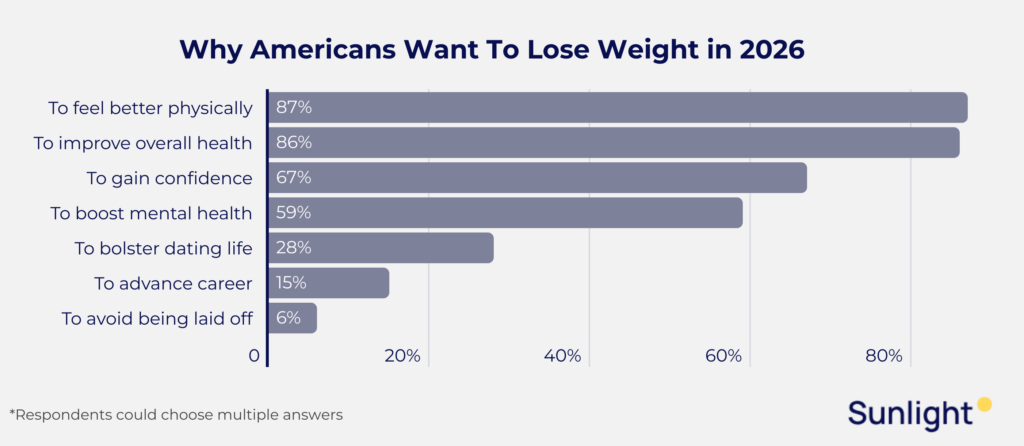
Health-related motivations are the primary reasons Americans want to lose weight, but confidence and quality of life also play significant roles. Nearly nine in ten say they want to feel better physically, and 85% want to improve their overall health. Two-thirds say weight loss would give them a confidence boost, while 59% say it would improve their mental health. More than a quarter hope it will improve their dating life.
“Weight loss is not just about the number on the scale, as even modest progress can quickly improve self-perception, confidence, and energy. Increased energy and improved physical health often create momentum, helping people make more positive decisions in daily life, including at work and at home,” says Dr. Tran. “From a medical perspective, reaching a healthier weight supports better stress management, mood regulation, sleep, and overall metabolic health. When someone feels physically better, they are often better equipped to handle everyday challenges with a more positive and resilient mindset.”
1 in 7 believe weight loss will benefit their careers
Career considerations also factor into weight-loss goals for some Americans. Fifteen percent say they want to lose weight to advance their career, and 6% say they hope it will help them avoid layoffs. Prior research has demonstrated that weight loss can impact workplace outcomes, including hiring, compensation, and promotion decisions.
About 51% of Americans who want to lose weight expect that doing so will lead to improved confidence at work, and 48% expect to be able to present a more professional appearance. More than one in four believe weight loss will increase their perceived leadership ability, while 23% say it could expand their job or promotion opportunities.
That expectation aligns with how appearance and confidence can influence workplace dynamics, says David Magnani, president and managing partner at M&A Executive Search. He notes that while weight itself is not a measure of professional value, the confidence people gain from feeling healthier often affects how they show up at work. “When someone feels better physically, they tend to lead better and communicate more effectively,” Magnani says. “Appearance bias still exists, and people who project a polished, confident presence are more likely to receive positive assumptions, which can translate into stronger leadership perception.
Methodology
In December 2025, Sunlight.com surveyed 1,977 U.S. residents ages 18 and older to examine weight-loss goals and interest in GLP-1 medications in 2026. The survey was conducted online. Results were post-stratified to align with U.S. population benchmarks for age and gender. Quality checks were applied to identify and remove inattentive or invalid responses.